Chemistry (Ceimigeachd)
Chemistry Department and Staff
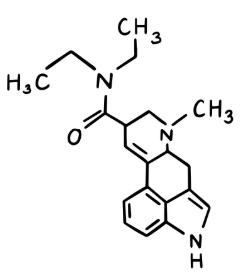
Hello and welcome to the Chemistry Department, where curiosity meets experimentation! Here we try to unlock the fundamental building blocks of the universe and take our pupils along with us.
- Mrs S Casey (Faculty Head Chemistry and Physics)
- Mr C Docherty
- Miss K Murdoch (Chemistry and Physics)
Why Choose Chemistry?
 Choosing to study chemistry allows pupils to view how the universe works, from the microscopic bonds inside a single molecule to the complex reactions powering our planet.
-
World Relevance: Chemistry explains the everyday world around you — from medicines, cosmetics, and sustainable green energy solutions.
-
Laboratory Skills: You will conduct exciting practical experiments, developing scientific techniques.
-
Career Pathways: Chemistry helps pupils get into high-demand subjects like medicine, dentistry, pharmacology, chemical engineering, forensic science, and environmental protection.
Supporting Learning at Home!
 Parents and carers play a vital role in pupil achievement. You can support your young person's progress by:
- Checking Google Classroom or Achieve regularly for assignments and homework, as well as revision resources.
- Encouraging structured revision using Qualification Scotland (QS) past papers and marking schemes as assessments approach.
- Ensuring that pupils attend supported study sessions that are on offer by the Science Department.
- Ensure they arrive at science lessons with their materials, stationery and a calculator. Encourage your child to bring their scientific calculator to every science lesson—relying on mobile phones is not permitted in class or exams.
National 4 Chemistry

This course is designed to spark curiosity about the material world, helping pupils understand how chemistry shapes our everyday lives.
The course is divided into three engaging units:
- Chemical Changes and Structure: Rates of reaction, energy changes, atomic structure, bonding, and acids and alkalis.
- Nature’s Chemistry: Fossil fuels, everyday consumer products, and the chemistry of everyday substances like alcohols and energy sources.
- Chemistry in Society: Metals and alloys, nuclear chemistry, the properties of plastics, fertilisers.
The National 4 Chemistry course will be internally assessed by teachers and will not require pupils to sit an external exam set by Qualifications Scotland (QS). Pupils will be credited for the units they achieve and their success will be recognised and certificated.
National 5 Chemistry
This engaging course builds upon the foundations of National 4, taking a deeper dive into chemical theory, problem-solving, and laboratory techniques.
The course covers three units:
- Chemical Changes and Structure: Rates of reactions, atomic structure and the periodic table, bonding and structure, acids and bases, and calculations.
- Nature’s Chemistry: Homologous groups, and calculating energy from fuels.
- Chemistry in Society: Metals, plastics, fertilisers, nuclear chemistry, and chemical analysis.
Pupils must carry out an assignment which requires them to research a topic of work. This investigation will be undertaken by the learner and the findings will be written up under exam conditions. This element contributes 20% to the final award.
Higher Chemistry

This stimulating course, designed for senior phase pupils, deepens theoretical understanding, builds on laboratory skills, and develops the advanced problem-solving required for university-level sciences and related careers.
The course is divided into four comprehensive areas of study:
- Chemical Changes and Structure: Reaction rates, periodic trends, and bonding and structure.
- Nature’s Chemistry: Homologous groups, and the chemical basis everyday consumer products.
- Chemistry in Society: Chemical equilibrium, enthalpy changes, oxidising / reducing agents, and calculations.
- Researching Chemistry: Developing core practical techniques (including volumetric analysis), and evaluating experimental error and accuracy.
In addition to the three course units, pupils are required to research a topic of work and the findings are written up under exam conditions. This element contributes to 20% of the Qualifications Scotland (QS) final grade.
Advanced Higher Chemistry
Getting into Advanced Higher Chemistry is an exciting milestone. This course acts as a bridge between school and university.
You deepen your knowledge of physical, inorganic, and organic chemistry while developing advanced laboratory and independent study skills.
The course is divided into three demanding areas of study:
- Inorganic and Physical Chemistry: Exploring electromagnetic radiation, atomic structure, the periodic table, transition metals. Physical chemistry concepts include: reaction kinetics, equilibrium, acids and bases, and thermochemistry.
- Organic Chemistry and Instrumental Analysis: Studying systematic organic chemistry, aromaticity, isomerism, organic synthesis, and advanced instrumental analysis techniques such as NMR spectroscopy, mass spectrometry, and chromatography.
- Researching Chemistry: Integrating practical research skills, handling gravimetric and volumetric analysis, and preparing for an independent experimental project.
In addition to the three course units, pupils will carry out and write-up a research investigation. This element contributes to 25% of the Qualifications Scotland (QS) final grade.
Qualifications Scotland (QS)
 Qualifications Scotland are constantly updating their materials to better the course content being taught. All materials can be found on their website.
National 4 Chemistry: https://www.sqa.org.uk/sqa/47423.html
National 5 Chemistry: https://www.sqa.org.uk/sqa/47428.html
Higher Chemistry: https://www.sqa.org.uk/sqa/47913.html
Advanced Higher Chemistry: https://www.sqa.org.uk/sqa/48459.html
National 5 Chemistry course changes
Changes have been made to this course following feedback from educators and learners:
- Reduced the question paper from 100 marks to 80 marks. (Section 1 now has 20 marks , and section 2 now has 60 marks )
- Reduced the duration of the question paper from 2 hours and 30 minutes to 2 hours.
- Assignment still has 20 marks.
Higher Chemistry course changes
Changes have been made to this course following feedback from educators and learners:
- New single question paper is worth 100 marks in total and lasts 2 hours and 30 minutes.
- Assignment is still worth 20 marks, and is scaled to 25 marks instead of 30.
Advanced Higher Chemistry course changes
Changes have been made to this course following feedback from educators and learners:
- Reduced the question paper from 110 marks to 100 marks, and removed scaling. Section 2 now has 75 marks instead of 85.
- Reduced the duration of the question paper from 3 hours to 2 hours and 30 minutes.
- The project still has 25 marks, and is now scaled to 34 marks instead of 40.
Useful Websites
Mrs Adam's Chemistry: https://missadamschemistry.com/
JabChem: https://jabchem.org.uk/chemistry/
BBC Bitesize: https://www.bbc.co.uk/bitesize/secondary
Achieve: https://achieve.hashtag-learning.co.uk/
Contact us
If you have any questions about our curriculum, course pathways, or how you can support your child's scientific learning at home, please do not hesitate to contact us through the school office.